Seeing Tina
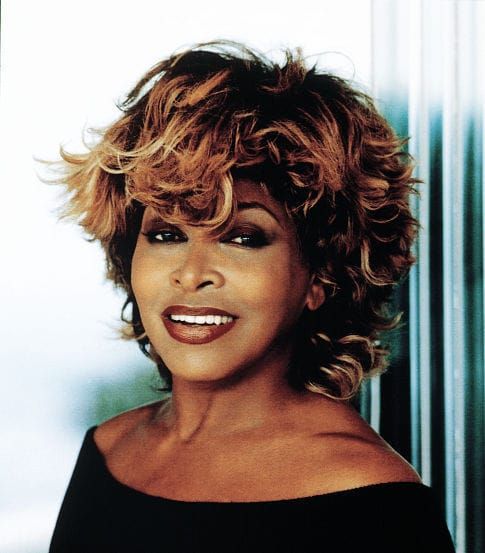
By the time I was born, Tina Turner was already a superstar. She was tearing up stages wherever she went; her voice was a staple on the radio. And she was married to a man who abused her relentlessly, often in plain sight of witnesses.
It was the early 1970s. And Tina was a star, but she was seemingly shackled to a tormentor.
Upon hearing of her death at 83, I found myself thinking a lot not about her dramatic escape in July 1976 (the night before Independence Day, no less), nor about her reinvention in the 1980s, nor about her ascension from superstar to national treasure to global icon.
I thought about those years she was humiliated and abused in plain sight.
People would come to her shows, shake their behinds and sing and laugh and scream with her. Some of them would go visit her backstage. Others saw and heard her at hotels. She was a super-famous person; surely there was nowhere in America Tina could go and not be recognized. And her pain inflicted by Ike was an open wound. Everybody knew about it. And no one came to help.
No one.
Think about that for a second.
How must she have felt, being one of the most visible people in the country while being on the business end of certainly a moral and spiritual if not a legal felony.
Everyone sees me. But somehow, no one sees my pain.
This is a common condition black women find themselves in. Whether at home, at work, at school, at church or wherever, we show up, we work hard, we can acquire fairly high profiles. We do the things that need to be done. But we know that profile does not shield us from the moral and spiritual nonsense hurled our way — sometimes from colleagues, sometimes from would-be rivals, and sometimes even from the people we go home to.
Much of that nonsense is designed not just to lower a profile or keep you in a place. It’s designed to shatter your sense of self.
Yet despite juggling this venom and our actual work, many of us keep going, because that’s what we do, right? We keep moving. We keep singing. We keep dancing. Some of us even keep smiling.
Which leaves some people to then surmise: Oh, well, it can’t be that bad, right? Cause look at her. She’s still out there. She’s fine. How bad can it be? It can’t be that bad.
And this is how we train ourselves how to glaze our eyes over even as bad things are happening right in front of us.
Decades after Tina’s worst days, the performer Meghan Thee Stallion created a video for The New York Times in support of her op-ed, “Why I Speak Up for Black Women.” In the video, speaking about black women, Meghan says this:
“She marches for everyone else, riots for everyone else, dies for everyone else. She loves everyone else, lives for everyone else. But when it comes down to her? Ain’t a motherfucker in sight.”
Surely 1970s Tina could relate.
I realize that people don’t like to talk about that part of her life. It’s much cooler to talk about her solo career and all the wonderful things that happened through and after that. And I am sooooooo very glad that she got to live that second life for real, out loud, for everyone to see, and not just as a fantasy in the corner of her brilliant mind.
But to fully take in her legacy, I think, we as a society have to grapple with all of her phases. And we have to grapple with the ways that we, her public, fell short for her. We may have adored and idolized her. But we also did her wrong.
June, 2023


